

It is 2016. Montgomery v Louisiana was just decided.
The year is 2016. The United States Supreme Court just issued the most consequential decision for children condemned to die in prison.
In Montgomery v. Louisiana, the Supreme Court fulfilled the promise it made four years earlier in Miller v. Alabama – that children could not receive mandatory sentences of life without the possibility of parole.
By holding the Miller decision retroactive, nearly 2800 individuals serving life without parole sentences across the country for crimes committed as children were granted the very thing they had been denied since childhood—hope.
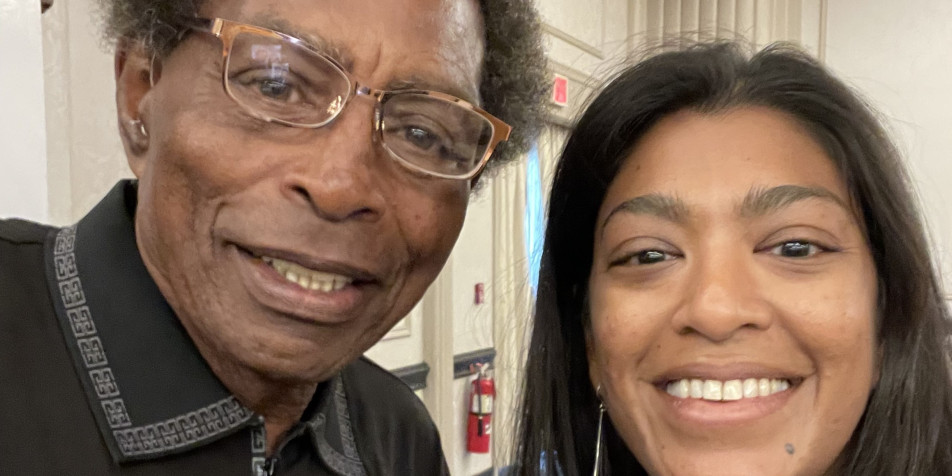
Abd’Allah Lateef, Deputy Director of The Campaign for Fair Sentencing of Youth and Juvenile Law Center board member reflected,
As the gravity of the decision began to sink in, I heard and saw several incarcerated persons - juvenile lifers and others - in a state of utter jubilation. I couldn't restrain the tears from streaming down my cheeks as I allowed myself to consider the implications: the possibility that my now illegal sentence would be reversed.
For more than 1300 people, that hope has become a reality. In the ten years since Montgomery was decided, more than 1300 individuals who thought they would die in prison for crimes that occurred when they were teenagers can now walk freely.
Led by Juvenile Law Center co-founder Marsha Levick, a team of Juvenile Law Center attorneys co-counseled Mr. Montgomery’s appeal to the United States Supreme Court. The legal arguments were technical. We had to reason that the Court’s decision in Miller was so substantive in nature that it established a new constitutional rule that required retroactive application. The actual impact of the decision – requiring resentencing or immediate parole eligibility for every person sentenced to mandatory life without parole as a teenager – would take years to come to pass.
Upon the decision in Montgomery, Juvenile Law Center and several colleagues around the country kicked into gear. To genuinely provide a meaningful opportunity for release to individuals that had spent decades in prison would mean coordinating counsel and teeing up legal motions to ensure the safeguards set forth in Miller were applied with force.
At first, progress was slow. Of the almost 2800 individuals serving life without parole sentences for crimes committed as children, more than 500 were incarcerated in Pennsylvania, and 350 in Philadelphia alone. According to the Pennsylvania Department of Corrections, ten years later only 15 people have yet to be resentenced. While tremendous progress has been made, justice was delayed too long for many; and several states did not move as swiftly as Pennsylvania in getting these individuals back into court. Many individuals spent decades incarcerated and years awaiting resentencing or parole. Henry Montgomery, whose case brought freedom to so many, was released just over four years ago after spending 57 years behind bars. And Abd’Allah spent 27 years incarcerated before he was granted release. The impact of these years is profound.
Today, while we celebrate the return home of so many, there remain just as many people across the country whose lives were stolen as children and who await their opportunity for release. Meanwhile, the hard-fought victory in Miller and all that followed is in jeopardy. The Court’s decisions in Miller and Montgomery rested on the 8th Amendment’s prohibition against cruel and unusual punishment. In the years that followed, the Court dialed back the breadth of its holding, reasoning that although life without parole sentences are inappropriate for individuals whose crimes reflect the “transient immaturity” of youth, they are nevertheless still applicable in cases where judges exercise discretion to consider the youth of the individual charged. The federal constitution’s application has become fragile prompting attorneys to bring cases under state constitutions where the 8th Amendment corollary may apply with greater force. Under such challenges, the Washington, Massachusetts, and Michigan State Supreme Courts have extended the holding in Miller to individuals over 18 banning mandatory life without parole sentences for older adolescents.
Yet, a new federal bill threatens to undo Miller in contradiction to scientific research and well-settled constitutional law. House Resolution 5172, which would apply to Washington D.C., increases mandatory minimum sentencing laws and requires mandatory life without parole sentences. This proposed resolution is in direct contradiction to the Supreme Court’s ruling in Miller and opens the door to a new challenge to this sentencing practice before a Supreme Court that has been willing to abandon precedent.
So, as we revisit 2016 and celebrate the victory in Montgomery v. Louisiana, we must hold on tightly to the promise it established. Montgomery was not merely a formal procedure that resulted in several new legal cases; it was a declaration that we wronged thousands of individuals who were condemned to die in prison as children. While our systems of incarceration may no longer mandate life sentences for children, they are still imposed. And sentences of hundreds of years are imposed without the formal label of life without parole to sidestep critical legal safeguards.
The work is nowhere near done. Ten years have shown us that progress is possible but can be fragile. So, we must continue to work toward a world where incarcerating children for the duration of their life is inconceivable.