

Youth Advocacy at Juvenile Law Center - Past, Present, and Future
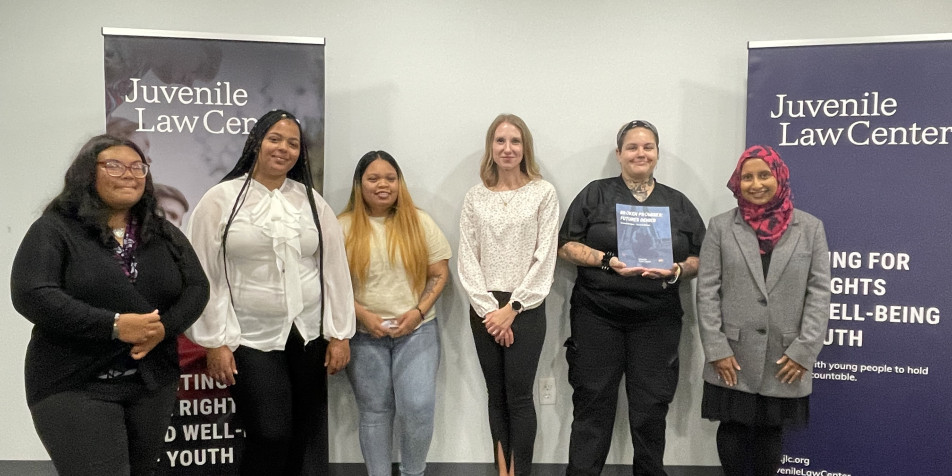
Youth partnerships have been a cornerstone for advocacy work at Juvenile Law Center for decades. Although our approach to engaging youth partners has evolved over time, the core value of experience-led advocacy persists. On the precipice of a new era in how we work with youth leaders, we reflect on the long, dynamic, impactful history of the Youth Advocacy Program at Juvenile Law Center.
In 2008, Juvenile Law Center launched the Youth Advocacy Program to engage system-involved youth in a critical evaluation of the juvenile legal system and develop and implement reform campaigns. That first year, four core members of Juveniles for Justice traveled to Washington DC to meet with congressional staff to encourage reauthorization of the protections set forth in the Juvenile Justice and Delinquency Prevention Act (JJDPA). The following year, we launched Youth Fostering Change, a sister program for young people with involvement in the foster care system.
Over the years, youth advocates in both programs worked with key stakeholders to address the insurmountable barriers youth were experiencing in Philadelphia, Pennsylvania, and nationwide. Some of their most notable works were exposing the harsh conditions of confinement through a publication titled “Broken Promises, Futures Denied,” influencing Title I, Part D of Every Student Succeeds Act, and meeting with Pennsylvania state senators in Harrisburg urging them to pass important legislation to secure better educational outcomes for system involved youth.
In 2022, after many years of existence, the names of the groups, Juveniles for Justice and Youth Fostering Change, no longer fit our values. The sustainability of a youth partnership program relies on its ability to adapt based on the reflections given by its youth members and the changing priorities of advocates in the field. The youth and staff felt that system change alone was not a sufficient goal; we wanted system transformation; youth wanted to be seen as children, not criminals. The old names did not capture this new goal, so youth advocacy staff, communications staff and youth advocates spent months developing new names and logos to best suit our changing priorities. After much crowd sourcing and reflection, the names changed to Advocates for Youth Justice and Advocates Transforming Youth Systems.
Though the names of the program changed, the commitment to the goals did not. Over the past 18 years, our youth advocates learned about and engaged in policy advocacy, media outreach, and public education. They built leadership and public speaking skills, gained political knowledge, and created a community with their peers. Their leadership was instrumental in many critical policy changes. Throughout this time, Juvenile Law Center staff have developed dynamic projects to increase the integrity of youth partnerships and skill building training and workshops to enhance professional opportunities while maintaining a robust network to refer youth to necessary support services.
In the Fall of 2024, the Youth Advocacy Program took on its most aspirational transition: the Stoneleigh Youth Advocacy Fellowship Program. While this shift is a significant step away from our historical youth leadership programming, it is an intentional shift to more thoroughly integrate lived experience and expertise into our legal strategies. Juvenile Law Center now employs youth part-time as fellows to work alongside youth advocacy, legal, policy, and communications staff to ensure all aspects of our work include youth and lived experience collaboration.
Although our youth partnerships no longer mirror our original model of youth engagement, Juvenile Law Center staff seek to transcend a model of utilizing and infusing youth voice and continue to work for the more authentic and equitable inclusion of lived expertise in our advocacy work.