

The Fifty Year Fight for Family Preservation
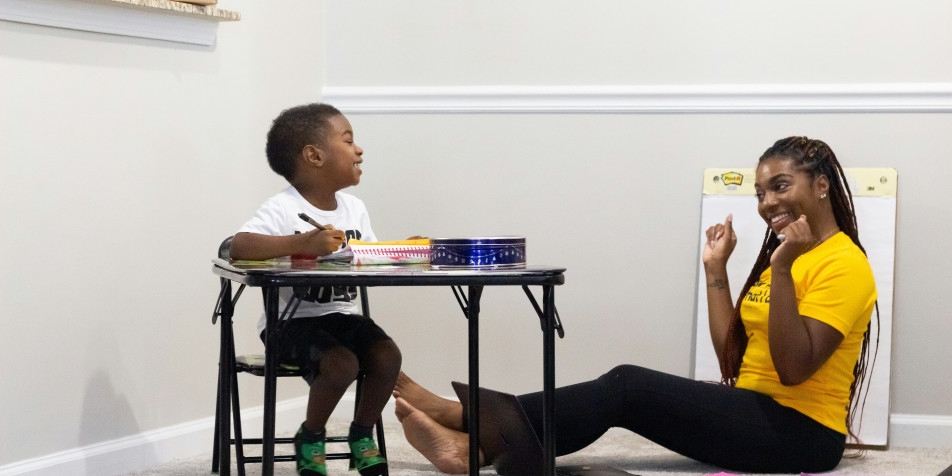
Juvenile Law Center has been a leader in the fight against unnecessary family policing and in favor of family preservation for 50 years. Our litigation helped to create pressure for the federal law that required family preservation services. Subsequently, widely referenced publications, trainings, and advocacy led by youth with lived experience in the family regulation system gave the law teeth and led to additional reforms. Despite this work, the over-reach of the family regulation system continues, and Juvenile Law Center remains committed to safely keeping families together.
Almost immediately after its founding, Juvenile Law Center established its leadership in protecting the rights of children labeled “abused” or “neglected.” We published the first of seven editions of Child Abuse and the Law in 1977. Simultaneously, we filed Cameron v. Montgomery County on behalf of Cameron, who had been in foster care for three and a half years with no services nor reviews of his case. Our lawsuit demanded the provision of services and reviews for children removed from their families so they could safely return home. Our 1979 settlement, which required regular judicial reviews of cases involving children like Cameron, prompted passage of the federal Adoption Assistance and Child Welfare Act of 1980 (AACWA). That law codified some of the findings in Cameron and mandated that states provide “reasonable efforts to prevent placement” and regular reviews of cases as a condition of receiving federal matching funds for agencies charged with addressing child abuse and neglect.
In 1983, Juvenile Law Center entered into a contract with Philadelphia Department of Human Services to represent children in abuse and neglect proceedings in Family Court. Every lawyer in the office had a caseload, providing an opportunity to push for services under the new “reasonable efforts requirement” and establish the floor of what the public agency must provide to preserve families and prevent placement. Our publication of the first of four editions of the Pennsylvania Judicial Deskbook in 1986 was informed by our work in the courts. Judges in Family Court relied on the Deskbook and it became the authoritative source of interpretation of the Commonwealth’s “reasonable efforts” requirement and other mandates.
In partnership with Annie E. Casey Foundation and other funders, in 1987 Juvenile Law Center’s Family Preservation Project helped to spearhead efforts across the country to prevent placement by advocating for services that were child-centered, family-focused and effective. Lawyers and youth advocates provided technical assistance across the country to make family preservation the foundation of services to address child abuse and neglect.
That same year, I began my legal career as a fellow at Juvenile Law Center and immediately began representing children in Family Court and providing training across the state. I assisted with editing the second edition of the Judicial Deskbook. Having my name on the reference that sat atop every judge’s desk in family court gave me immediate credibility. I recall having a judge cite a statement in the Deskbook as authoritative, which was an argument I helped to construct to further push the requirements of family preservation.
Years after our advocacy efforts in the 1980s, there remained a major flaw in AACWA: funds for family preservation were “capped” or limited by a set appropriation each year while funds for placement and adoption were “open ended” making federal matching funds available at an unlimited level. Despite advocacy to provide preventive services, this funding differential skewed agencies’ response toward placement. Federal laws further reformed the way states provided services to abused and neglected children, but none changed this funding imbalance. In 2018, after decades of advocacy by a wide coalition of partners, Congress passed the Family First Prevention Services Act (FFPSA). To address substance abuse, mental health, in-home parenting skills and kinship navigation services, the uncapped source of federal funding could now be used for preventive, not only placement, services.
Nationwide, Black, Brown, and Indigenous children are still removed from their homes and families at disproportionate rates. And Philadelphia places a higher percentage of children in the foster system than other major city. To prevent the regulation and destruction of families via placement rather than reinforcing familial strengths with services, our efforts must include eradicating racism and bias in responding to families in need of services. Juvenile Law Center continues to fight for the rights of all children to remain safely with their families and to receive the services they need to thrive.