
Coalition Work and Youth Voice
Our Stoneleigh Youth Advocacy Fellows reflect on why community partnership and youth voice are essential components of effective advocacy.
Youth with lived experience play a powerful role in efforts to reform the juvenile legal and foster systems because they bring firsthand knowledge, unique insight, and innovative approaches to advocacy. Many young people become involved in these movements after experiencing foster care, family separation, incarceration, school discipline, or other forms of system involvement. Their experiences provide a deeper understanding of how these systems impact children and families and help identify meaningful solutions. Organizations like Juvenile Law Center recognize that effective advocacy requires intentionally partnering with youth leaders and community-based organizations so that reform efforts reflect the realities of those most affected. Meaningful changes happen when young people are not only included in conversations but are empowered as partners in decision-making, leadership, and strategy.
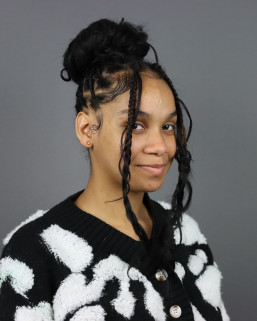
Before coming to Juvenile Law Center as a Stoneleigh Fellow, I understood some of the challenges families face because I had experienced them myself. But my time at Juvenile Law Center has helped me deepen that knowledge and better understand how both the family policing and juvenile legal systems operate. I have learned more about the history of these systems and the ways they have disproportionately harmed Black families and communities, and the policies, practices, and systems that contribute to the experiences of children in the system.
One thing I love about being at Juvenile Law Center is that people actually listen to system-impacted youth. Too often, decisions are made about young people without including them in the conversation. Here, I have seen firsthand what it looks like to intentionally create space for youth and families to share their experiences, influence strategy, and help lead advocacy efforts. People value what I have to say, not just because of what I have learned professionally, but because of what I have lived through. The work we do honestly speaks to my inner child. We are working behind the scenes to help youth and families who may not have anyone willing to help them or fight alongside them.
One of the projects I have worked most closely on is challenging mandated reporting. As part of this project, I participated in the newly established Mandated Reporting Community Coalition, which brings together directly impacted families, advocates, community leaders, and professionals who are working to transform mandated reporting laws in Pennsylvania. Through listening sessions, research, and collaboration, the Coalition is developing recommendations that center family well-being, racial justice, and community-based solutions rather than punitive responses. What stands out to me about this work is that people with lived experience are not just invited to participate. They are valued as leaders, their voices help shape decisions, and they are compensated for their time and expertise. To me, that is what real partnership and power-sharing look like.
Too often, poverty is treated as neglect, and families who need support end up being reported to child welfare agencies instead of being connected to resources. Part of my role in the Mandated Reporting Coalition has involved researching community-based organizations that provide assistance with housing, utilities, food, diapers, clothing, and other basic needs. This research supports the coalition’s work to identify resources that can help families get the support they need before system involvement occurs.
One of the most meaningful moments of my participation in this Coalition came during a speaking engagement at Temple University's Beasley School of Law focused on mandated reporting. It reminded me why youth voice is so important. It is one thing to read statistics or research reports, but behind every statistic is a real person and a real family. During that discussion, I was not just talking about data or policy; I was one of the young people represented by those numbers. I was able to share my personal experiences and speak honestly about the impact these systems can have on children and families. We discussed the harm caused by mandated reporting, explored alternatives that rely more on community support, and talked about the importance of building trust with families rather than immediately turning to punitive responses. Being able to contribute both my lived experience and the policy knowledge I have gained through this fellowship reinforced why youth and community voices must be included in these conversations. The people closest to the problem are often closest to the solution.
My fellowship at Juvenile Law Center has shown me that lasting change requires more than good intentions. It requires meaningful partnerships, shared power, and a commitment to listening to those most impacted. When youth and families are given the opportunity to lead, advocacy becomes stronger, solutions become more effective, and systems move closer to real change. That is the lesson I will carry with me long after my fellowship ends.